Limited Operational Visibility
Organizations cannot see the live status of vehicles, equipment, assets or environmental conditions.
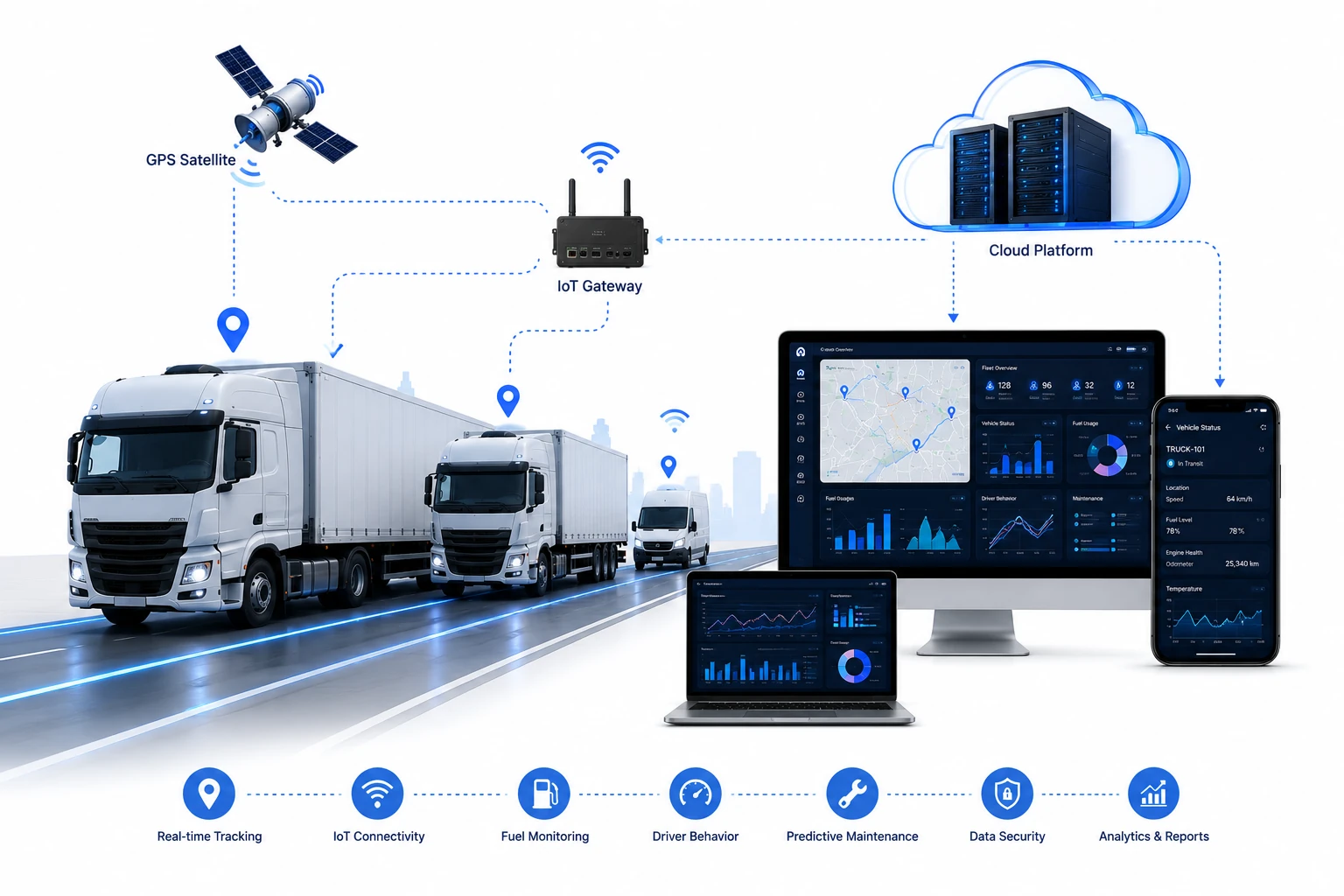
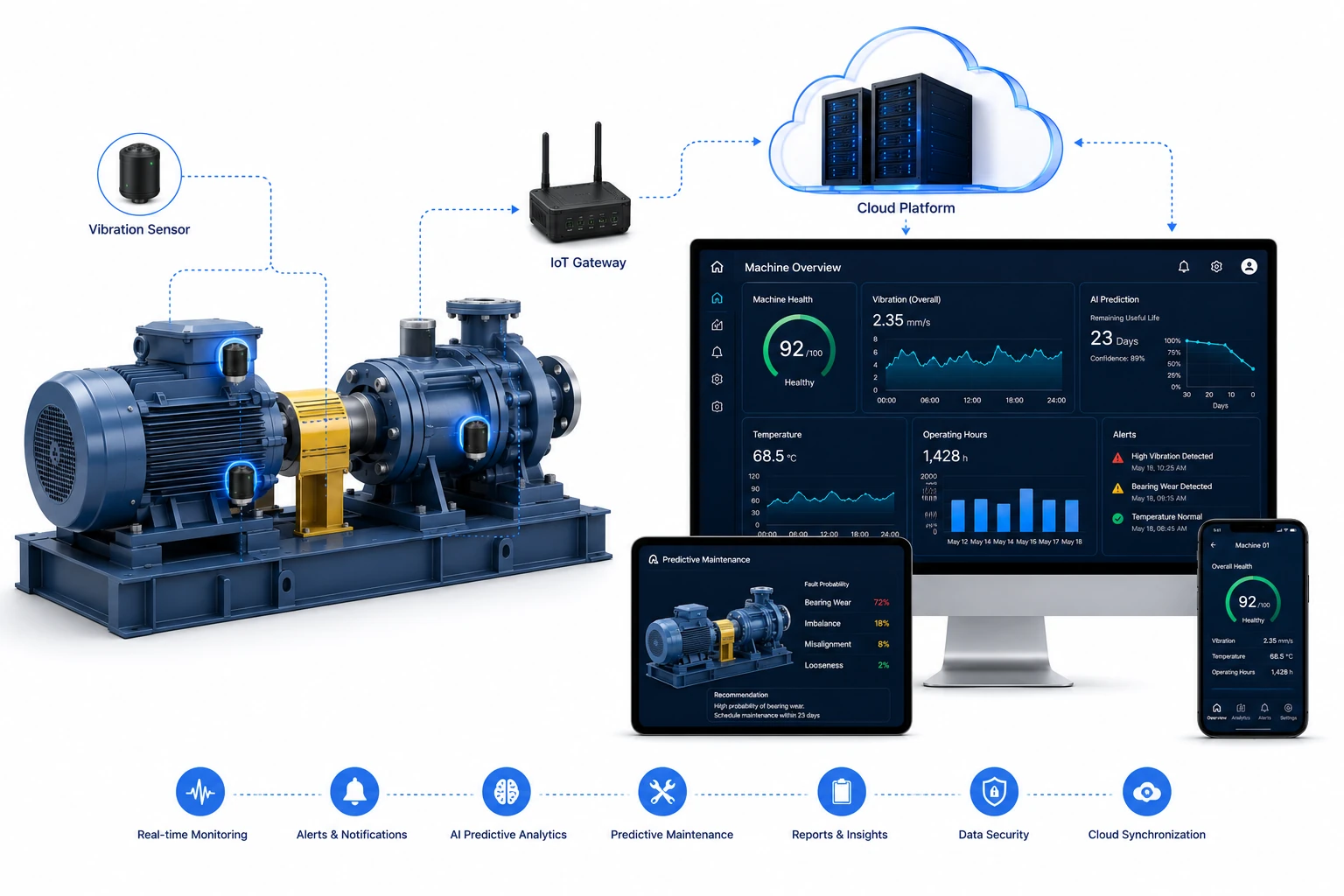
PolarGrid combines sensors, telematics devices, gateways, connectivity, cloud software and business integrations to solve monitoring, safety, utilization, maintenance and visibility challenges across connected operations.
Solution-Design Philosophy
Before recommending any hardware, PolarGrid first works through the questions that actually determine the right architecture:
From these answers, the architecture may combine GPS, BLE, CAN Bus, wired sensors, gateways, cellular communication, APIs, cloud dashboards and mobile applications — selected for the deployment, not applied as a single fixed template. No two operational challenges are solved with the exact same architecture.
Operational Challenges
Common gaps across fleets, assets, equipment and facilities that a connected solution is designed to close.
Organizations cannot see the live status of vehicles, equipment, assets or environmental conditions.
Temperature excursions, unauthorized movement, machine faults and safety events may be discovered too late.
Hardware, sensors, dashboards and business systems often operate in isolation.
Equipment and vehicles may be underused because deployment and status are not centrally visible.
Failures and service requirements are addressed after downtime has already occurred.
Spreadsheet-based records make compliance, traceability and decision-making difficult.
Solution Categories
Eight connected solution categories, each built around a specific operational problem rather than a single product.
Challenge: Limited vehicle visibility, fuel loss, route deviation, unsafe driving and unplanned downtime.
Approach: Combine GPS tracking, vehicle data, CAN integration, alerts, analytics and maintenance visibility.
Typical Data: Location, speed, ignition, trips, fuel, driver behaviour, diagnostics and service status.
Outcome: Improved dispatching, safety, utilization and operating cost control.
Explore Solution →Challenge: Temperature excursions, door events, product spoilage, delayed alerts and manual compliance records.
Approach: Connect temperature, humidity and door sensors with GPS trackers, gateways and cloud reporting.
Typical Data: Temperature, humidity, door status, GPS position, trip history, route deviation and sensor health.
Outcome: Faster incident response, lower spoilage risk and better compliance evidence.
Explore Solution →Challenge: Assets are difficult to locate, movement is unauthorized, utilization is unclear and service dates are missed.
Approach: Use GPS trackers, BLE tags, gateways, geofences and lifecycle records according to the asset's movement pattern.
Typical Data: Current or last-known location, movement, gateway detection, battery, utilization and service status.
Outcome: Faster asset recovery, lower loss risk and better lifecycle management.
Explore Solution →Challenge: Heavy equipment, tools and personnel operate across changing and potentially hazardous environments.
Approach: Combine equipment tracking, BLE or UWB-compatible location architecture, proximity alerts, operator identification and equipment-status monitoring according to scope. UWB-based positioning is an architecture option evaluated per project, not a default deployed on every site.
Typical Data: Equipment location, movement, utilization, operator identity, proximity events, geofences and maintenance status.
Outcome: Improved equipment control, safer operations and lower tool or rental losses.
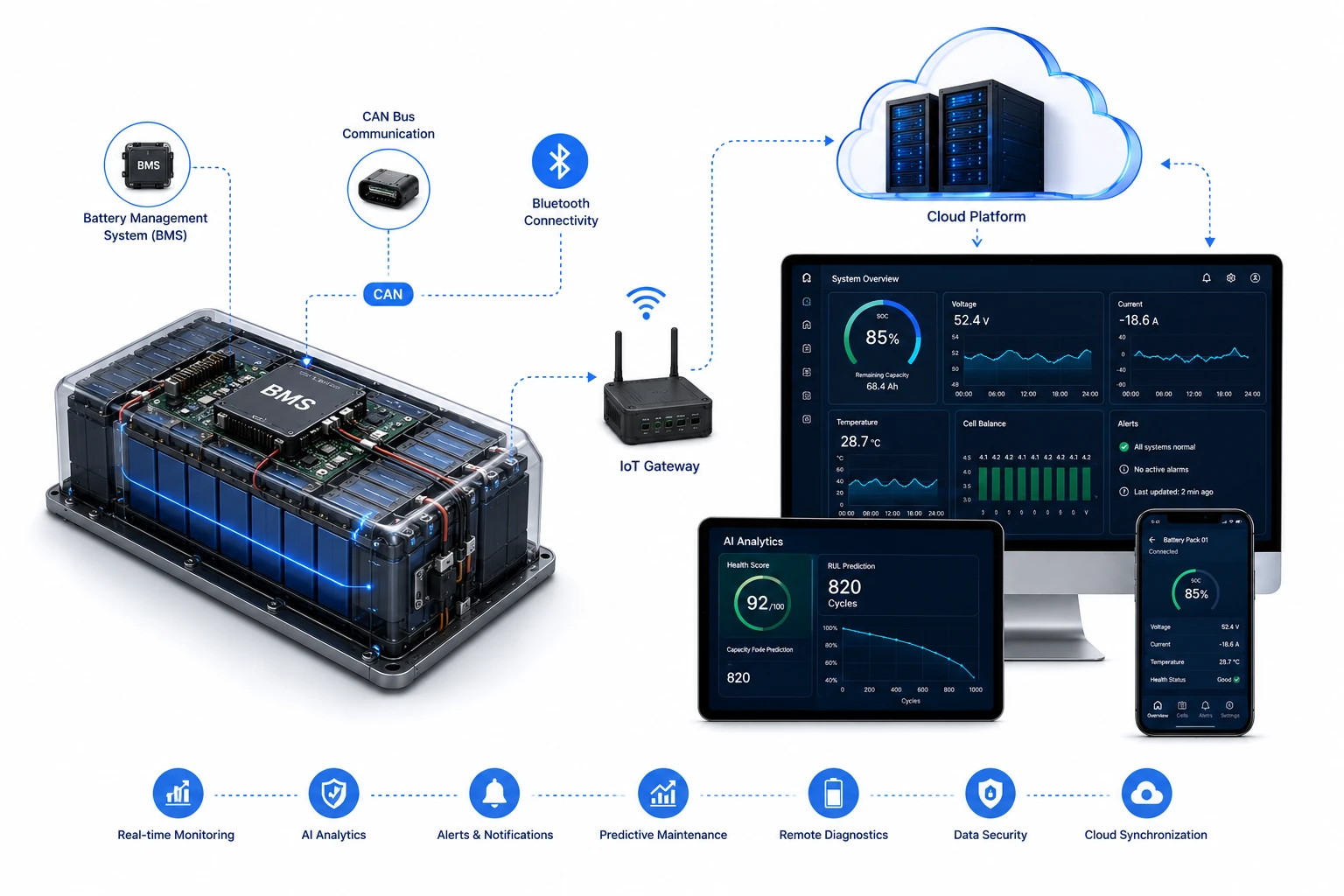
Industrial Asset Tracking → Fleet Management → Predictive Maintenance →Challenge: Battery degradation, charging uncertainty, service complexity and limited remote diagnostic visibility.
Approach: Integrate supported BMS and CAN data with telematics connectivity, dashboards and alert rules.
Typical Data: SOC, SOH, voltage, current, temperature, charging status, cycles and fault codes when supported.
Outcome: Better battery decisions, reduced downtime and improved service planning.
Explore Solution →Challenge: Equipment is maintained reactively, resulting in breakdowns, downtime and poor spare-parts planning.
Approach: Connect sensors, controllers, CAN or industrial interfaces to monitor condition, runtime, faults and trends.
Typical Data: Runtime, vibration, temperature, pressure, current, fault codes, utilization and service status.
Outcome: Earlier warning, improved planning and lower unplanned downtime.
Explore Solution →Challenge: Remote equipment, facilities and machines lack secure connectivity to cloud platforms or central operations.
Approach: Combine industrial routers or gateways, cellular connectivity, Ethernet, Wi-Fi, VPN-ready architecture, MQTT and APIs according to deployment requirements. Final router, gateway, VPN and network capabilities depend on the selected hardware and deployment design.
Typical Data: Device connectivity, machine status, sensor data, alarms, network status and remote diagnostics.
Outcome: Centralized monitoring, faster troubleshooting and reduced site visits.
Predictive Maintenance → Industrial Asset Tracking →Challenge: OEMs, integrators and solution providers depend on third-party branding or disconnected software systems.
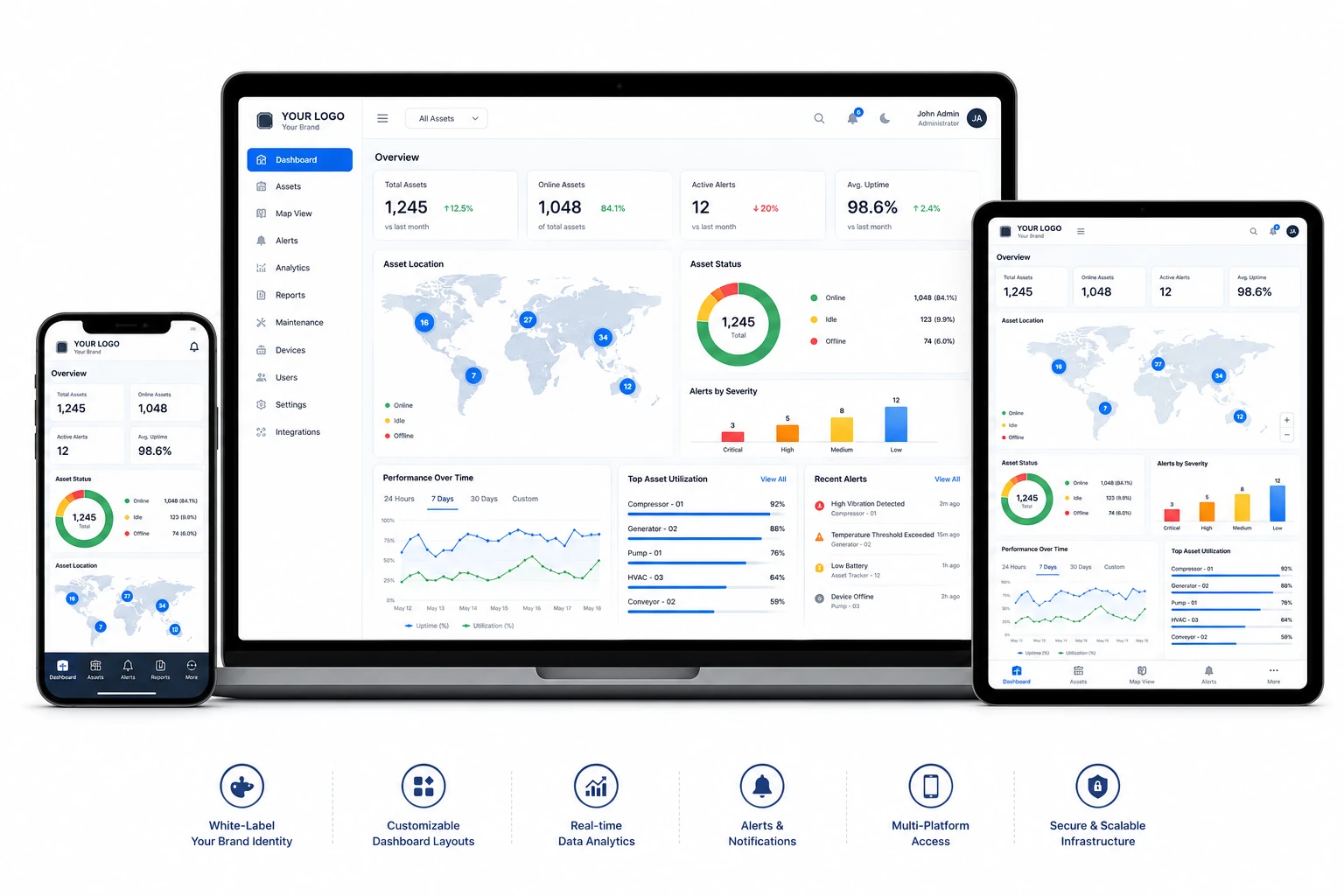
Approach: Provide configurable branding, customer management, device visibility, reports, roles, APIs and mobile access according to project scope.
Typical Capabilities: Custom branding, multi-tenant access, customer roles, dashboards, alerts, reports and integrations.
Outcome: Faster market launch, stronger brand ownership and scalable customer management.
Explore Solution →How PolarGrid Designs a Solution
The same process behind every connected solution, regardless of industry or asset type.
Understand the business objective, monitored assets and required outcome.
Review installation conditions, connectivity, power, movement and environmental exposure.
Clarify what must be detected and the required accuracy or threshold.
Select GPS, BLE, CAN, wired sensors, gateways, cloud and integrations.
Configure device communication, dashboards, alerts, reports and APIs.
Test the system under real operating conditions and confirm data quality.
Deploy the validated architecture across the required assets, vehicles or facilities.
Review performance, support users and enhance the solution as requirements evolve.
Technology Architecture
The final architecture is selected according to the application, operating environment, connectivity availability, reporting interval and integration scope.
Solution-Selection Guidance
Explore Connected Fleet Operations.
Explore Cold Chain Visibility.
Explore Industrial Asset Intelligence.
Explore Remote Industrial Connectivity.
Explore White-Label IoT Business Enablement.
Business Outcomes
Act on events sooner with real-time alerts and visibility.
Catch developing issues before they cause unplanned stoppages.
Reduce spoilage, theft and unrecovered equipment.
Understand how vehicles, assets and equipment are actually used.
Support safer operations for drivers, operators and site personnel.
Replace manual records with automated, traceable data.
Manage every asset, vehicle and site from one connected view.
Base operational decisions on real, connected data.
Products Supporting the Solutions
Each solution above is delivered through one or more of these connected products.
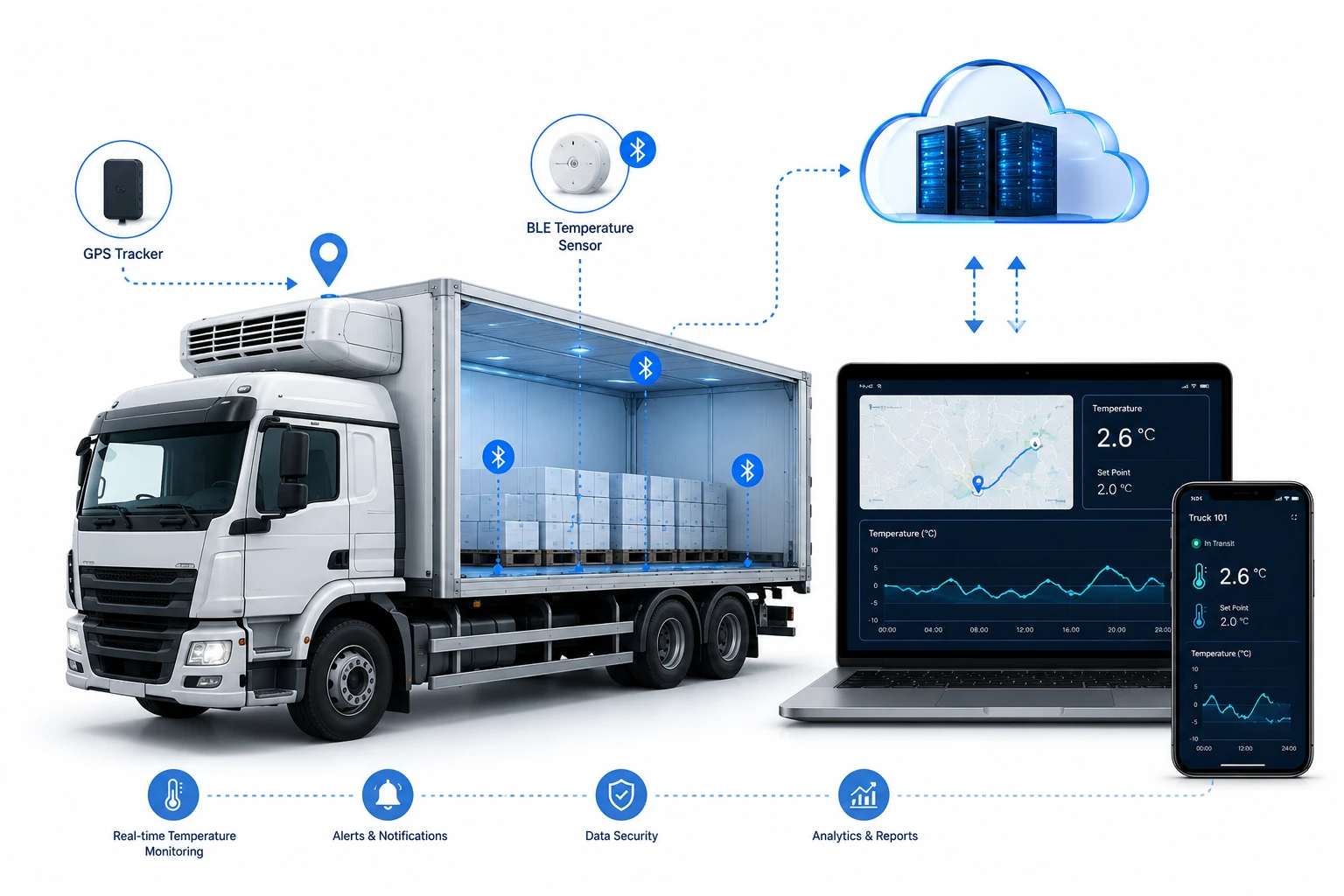
Temperature, humidity, door and GPS visibility for cold shipments.
Learn More →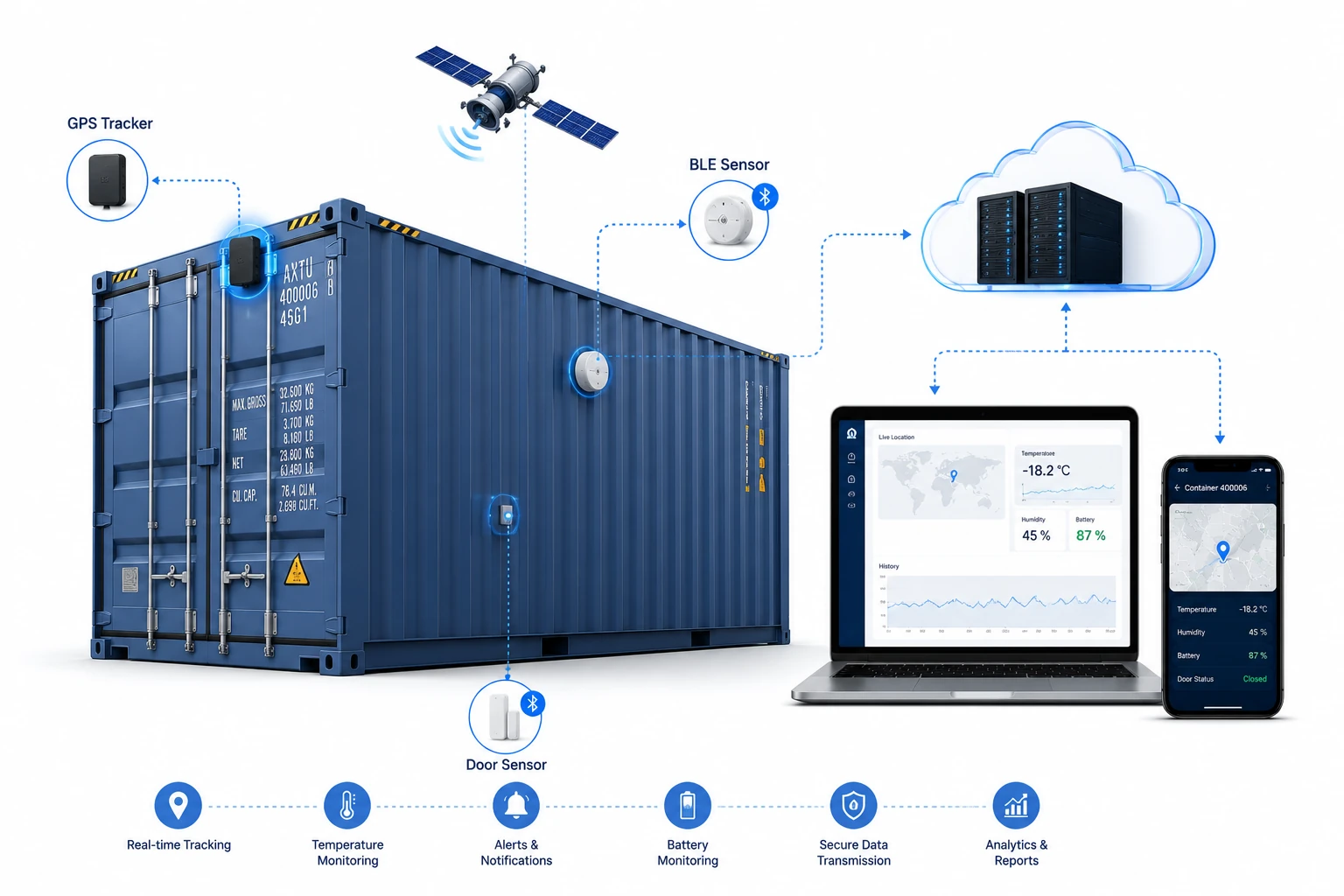
FAQ
Tell us what must be monitored, how accurately it must be detected, how quickly your team needs the information and what action should follow.